
Tourist circuit around Roman ruins in Provence
With Easy going provence VTC, We offer you various options touristic routes around Local heritage with the provision of a high-end vehicle with a bilingual English-speaking VTC driver
Dear tourist friends, we have selected a tour of Roman ruins in Provence for you. Our bilingual private driver will take you around and share his perfect knowledge of Roman Antiquity. Let us guide you through the cultural sites of Arles, Orange, Marseille, St Remy de Provence and Nîmes without worrying about your transportation.
Why Roman remains in Provence.
Roman remains are the physical traces left by the Roman Empire in the regions it conquered and occupied for several centuries. The Romans left their mark on architecture, culture, and technology, and their remains are still visible today in many parts of the world.
Among the Roman remains The most famous are the famous monuments of ancient Rome, such as the Colosseum, the Pantheon and the Roman Forum. But there are also many other examples of Roman heritage, such as aqueducts, paved roads, public baths, bridges and temples.
Outside of Rome, Roman remains are found in many other countries, including Spain, France, Great Britain, Germany, Turkey, and North Africa. Ancient cities like Pompeii and Herculaneum in Italy and Jerash in Jordan are remarkable examples of well-preserved archaeological sites.
The Roman remains testify to the ingenuity and greatness of the Roman civilization, as well as its influence on the cultures and societies that followed. They also constitute a valuable source of information for archaeologists and historians who seek to understand this fascinating period in the history of humanity.
Among the most famous Roman remains are the famous monuments of ancient Rome, such as the Colosseum, the Pantheon, and the Roman Forum. But there are also many other examples of Roman heritage, such as aqueducts, paved roads, public baths, bridges, and temples.
Outside of Rome, Roman remains are found in many other countries, including Spain, France, Great Britain, Germany, Turkey, and North Africa. Ancient cities like Pompeii and Herculaneum in Italy and Jerash in Jordan are remarkable examples of well-preserved archaeological sites.
What are the Roman remains in Provence?
Provence was conquered by Rome in the 1st century BC, and thus inherited a vast ancient architectural heritage. These remains: arenas, ancient theaters have blended into the landscapes and local culture and are now recognized as UNESCO World Heritage Sites.
Here are some examples of Roman sites to discover in Provence:
- The Arenas of Nîmes Built in the 1st century AD, they are one of the best-preserved Roman amphitheatres in the world and can accommodate up to 25,000 spectators to watch the gladiatorial fights. Today this ancient monument brings together concert lovers and holidaymakers from Nîmes, who celebrate votive festivals around the bull and horses.
- A Nîmes we invite you to visit the Square house, a Roman temple of the 1st century BC, and the Magne tower, a remnant of the ancient enclosure of 6 km in length that surrounded the ancient city.
- The Pont du Gard This Roman aqueduct, built in the 1st century AD, allowed the transport of water over a distance of 50 kilometers to Nîmes. The Pont du Gard has been classified as a UNESCO World Heritage Site since 1985.
- The ancient theater of Orange Built in the 1st century AD, it can accommodate up to 9,000 spectators and is known for its magnificent sculptures and reliefs. In orange you will also find the Arc de Triomphe
- The Roman city of Glanum Located near Saint-Rémy-de-Provence, this city was an important religious and commercial center during the Roman period. Traces of temples, thermal baths, and houses can be seen there.
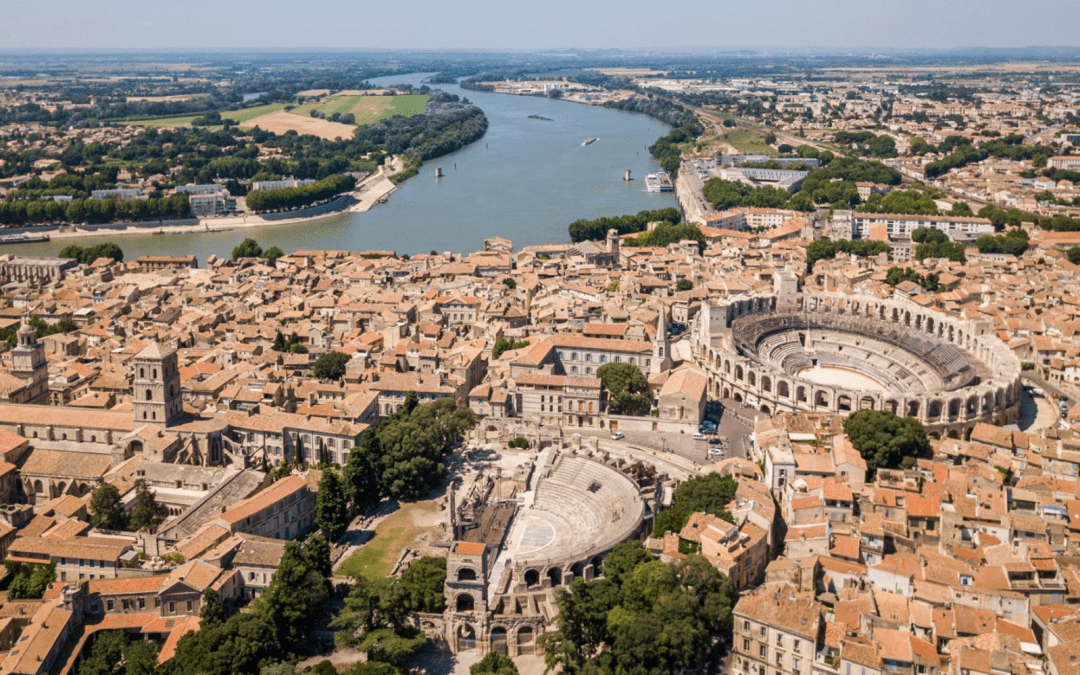
- The Roman remains of Arles As mentioned previously, Arles has many important Roman remains, such as the arenas, the theater, the circus, and the thermal baths.
- Vaison la Romaine renamed the city «La Romaine», which with its 15 hectares is the largest archaeological area in France. You can discover a superb ancient theater with 6,000 seats, the ruins of thermal baths, commercial streets dating from the 1st century and the remains of rich residences, the house at Apollon lauré, the house Buste en argent and the house at la Tonnelle. To conclude your guided tour Don't miss the visit from the Théo Desplans archaeological museum !
- The Roman remains of Marseille The city of Marseille also has interesting Roman remains, such as the ancient theater, the forum, the ancient port, and the ramparts.
Provence is therefore a region rich in Roman remains, witnesses to the importance of this region in the Roman Empire.
What are the Roman remains in Arles?
The Roman remains of Arles They are numerous and represent an important historical and cultural heritage of the city. Arles, located in the department of Bouches-du-Rhône in Provence, was founded by the Greeks in the 6th century BC, but it was under Roman domination that the city developed and became an important economic and cultural center. The city of Arles was elevated to the rank of imperial residence by Emperor Constantine.
Among the most important Roman remains in Arles are:
- The arenas of Arles: built in the 1st century BC, they could accommodate up to 25,000 spectators for gladiator fights and other spectacles. Now you can discover during the Arles holidays in April and September the bullfighting and tauromachy spectacles, which is considered a world heritage site.RT fights wild-breed bulls in a confrontation with a bullfighter.
- The ancient theater: also built in the 1st century AD, it could accommodate about 10,000 spectators for theatrical and musical performances.
- The Roman Circus: built in the 2nd century AD, it could accommodate about 20,000 spectators for chariot races.
- The Roman Forum: located in the heart of the city, it was the political, economic and religious center of Arles during the Roman period.
- The thermal baths of Constantinople: built in the 4th century AD, they were among the largest Roman thermal baths in Gaul.
- You will also find other Roman remains to discover in the city of Arles, such as sarcophagi, mosaics, aqueducts, bridges and walls. Arles was inscribed on the UNESCO World Heritage List in 1981 due to its exceptional Roman remains.
With Easy Going Provence VTC We suggest you complete your visit to Arles with a visit to its Blue Museum of Antique Provence, where the oldest known bust of Julius Caesar is exhibited (sculpted during his lifetime) and which was recovered from the waters of the Rhone in Arles in 2008.
Book your tour around Roman antiquities with a private driver